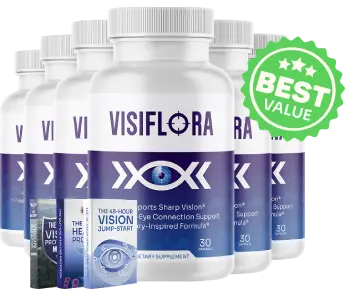
 VISIFLORA
The VisiFlora ingredients list combines carotenoids, vitamins, minerals, an amino acid and botanical extracts. Its four named groups help explain the formula: antioxidant nutrition, the gut-eye connection, botanical performance support, and macular and lens nutrients. Understanding those groups makes it easier to see what the product adds to your daily routine.
The most recognizable names include lutein, zeaxanthin, vitamin A, vitamins C and E, and zinc. Other additions include astaxanthin, bilberry, saffron, ginkgo, grape seed extract, rutin and quercetin. Below is a practical guide to the complete named ingredient range, without assuming that every ingredient has the same role or the same evidence behind it.
The Vision Defense Matrix
Astaxanthin is a carotenoid antioxidant and gives this group one of its eye-focused components. Vitamins C and E add familiar antioxidant nutrients, while copper and selenium provide trace minerals. Chromium rounds out the group with a nutrient connected to normal metabolic function. These are different categories of ingredients working within one formulation.
For comparison purposes, pay attention to the vitamins and minerals you already take. A multivitamin may contain vitamin C, vitamin E, copper, selenium and chromium even when its front label does not emphasize eye health. Looking at the full panels side by side gives a clearer picture than comparing product names alone.
The group title describes the formula’s nutritional focus. It does not mean that each component independently prevents damage or that the combination is a substitute for medical eye care. Its practical value is the range of antioxidant and mineral nutrition in the same daily capsule as the product’s carotenoids and botanicals.
The Gut-Eye Barrier Complex
Grape seed extract, rutin and quercetin bring plant compounds into the gut-eye group. They sit alongside taurine and alpha lipoic acid, giving this part of the formula more variety than a simple herbal blend. Taurine is an amino acid, while alpha lipoic acid is included for antioxidant support.
This group helps explain the product’s gut-eye positioning. The formula links eye-focused nutrition with wider cellular and digestive wellness, rather than limiting the ingredient list to the most familiar eye vitamins. The serving instructions remain simple; there is no separate schedule for these ingredients or additional preparation required.
A gut-eye focus does not automatically make a supplement a probiotic. VisiFlora’s named ingredient list does not identify a probiotic strain blend. If you are specifically looking for a probiotic product, a strain list and related label information would be a different comparison from the nutrient and botanical combination described here.
The Vision Performance Boosters
Ginkgo biloba, coleus forskohlii and eyebright make up the performance-focused botanical group. Ginkgo and coleus connect to the formula’s circulation-related positioning, while eyebright is a traditional eye-wellness botanical. Their presence adds an herbal dimension to the carotenoids and vitamins found elsewhere in the capsule.
Botanical names are worth including in a supplement discussion with your healthcare professional. A product may contain familiar vitamins but also herbs that matter when medicines or other supplements are involved. Providing the complete list is more useful than simply saying that you are considering an eye vitamin.
Traditional use and nutritional design are useful background, but they do not establish a personal treatment plan. If your reason for shopping is a diagnosed eye condition, ask your eye-care professional how a broad formula fits the care already recommended. This keeps the ingredient decision connected to your actual needs.
Macular and lens nutrients
Vitamin A, identified as beta carotene, is part of the macular and lens group. It supports normal visual function, including low-light vision. Lutein and zeaxanthin from marigold add the carotenoid pair associated with macular pigment. These names explain why the group is central to the product’s eye-nutrition identity.
Zinc is listed at 11 mg. This mineral contributes to normal retinal enzyme activity and complements the vitamin A focus. Because zinc can also appear in multivitamins and other eye products, its stated amount is a useful point to bring into a comparison of your total supplement intake.
Bilberry extract, lycopene and saffron extract complete the group. Bilberry contributes anthocyanin-rich botanical material, lycopene adds another carotenoid, and saffron adds a further plant extract. The combination brings several sources of nutritional support together instead of making the entire formula depend on lutein and zeaxanthin alone.
Ingredient count and amount are different questions
VisiFlora is promoted with a 22-in-1 description, while the named ingredient groups above identify 21 individual actives. Paired entries such as vitamins C and E contain two individual nutrients, while others name a single botanical or mineral. The complete current bottle label is the reference for the product you receive.
An ingredient name also does not reveal its amount. Zinc has an explicit 11 mg entry in the product information used here; the same level of detail is not available here for every other component. For exact quantities, forms and any blend details, review the Supplement Facts panel and ask product support about anything unclear.
The ingredient pictures are illustrations of nutrient sources or ingredient groups. A photograph of marigold, fruit or a mineral-themed food selection is not the Supplement Facts panel. The distinction matters when checking quantities, because attractive artwork cannot answer a dosing question that belongs on the label.
Reading the bottle as a complete product
Start with the serving instructions, then move through the active ingredients and any other ingredients. This keeps the daily serving connected to the actual capsule you will take. The suggested routine is one capsule with a meal and water, but the bottle directions should remain available whenever you need to check a detail.
Next, compare the formula with products already in your cupboard. Focus on repeated vitamins, minerals and herbs rather than the number of bottles. An eye supplement, multivitamin and general wellness blend may share ingredients even though each has a different purpose on the front label.
If an allergy, dietary preference or specific ingredient form affects your choice, ask a direct question before ordering. The non-GMO, stimulant-free and vegetarian-friendly product description gives useful general information, but an individual restriction may require a more precise label answer. Product support is available at support@visiflora.com.
Choose the formula before the package
All three VisiFlora packages contain the same product formula. Starter, Advanced and Ultimate change how many bottles you buy, the product total and the per-bottle price. A larger package does not create a stronger capsule or a different ingredient ratio, so composition should come before the quantity decision.
Once the ingredient mix fits your plans, the package comparison becomes straightforward. Two bottles cost $158 before shipping, three cost $177 with free US shipping, and six cost $294 with free US shipping. Each includes the same three digital guides, including a seven-day nutrition plan with 21 recipes.
If your main priority is broad eye-focused nutrition in a simple daily serving, VisiFlora’s combination is worth examining as a whole. Use the current label to resolve precise ingredient questions, then choose the supply that suits your spending and routine. The benefits and considerations guide explains the next part of that decision.